
Bringing Key Functions into a Bairns Hoose

Social work
A proportion of children and families accessing Bairns’ Hoose will have ongoing social work support prior to the Interagency Referral Discussion (IRD). In North Strathclyde the majority of children and young people who are referred for IRD are not open to social work for ongoing support at the point of the notification of concern being received.
- Notification of concern received into social work in respect of a child or young person where there is suspicion that they are subject to or at risk of significant harm from abuse and/or neglect. This includes trafficked children or young people, children or young people at risk of exploitation and facing unsafe situations due to a lack of protective factors.
- IRD arranged: IRDs can address a number of areas of concern that, while not directly linked to familial responsibility, can and do result in significant harm to children or young people and therefore also require a strategic response from local services. Those responsible for joint decision making within the IRD will be the core agency representatives: a social work manager, a detective sergeant or detective inspector from Police Scotland, the identified child protection advisor, child protection service, health and where appropriate a relevant education manager. The IRD Record should clearly identify any action being taken to protect and support the child (with reference to multi-agency guidance for practitioners and managers).
Further action taken in respect of social work:
- Voluntary - social work may seek to offer voluntary supports to the child or young person and their family. This may involve allocating a social worker to undertake specific work which would help to address any worries that professionals, the child or young person or their family may have and offer support, advice and guidance for the required period.
- Where there is no identified need for support identified from IRD, the family and involved professionals will be notified that social work intend to close the initial concern raised to them. As there has been an IRD, social work would retain detail of that on record for the specified time in each local authority retention guidance. This is a legal requirement of them and is in case that information is needed again in future.
- Statutory - In instances where there is believed to be significant risk(s) to a child or young person, social work will initiate a child protection assessment. The purpose of this would be to understand any risks that the child or young person could be exposed to, as well as any protective factors which may negate them. This will involve them linking in with the Child Interview Team in relation to their completed joint investigative interview. At the end of this assessment three options are available; no further action or involvement by social work, a period of voluntary support to address any identified risks, or an Initial child protection planning meeting could be recommended. In the case of the latter, that multi agency meeting would consider whether the child’s name should be placed on the local child protection register for a period. The purpose of that would be to provide specific supports to offset identified risks and to further assess the situation. Subsequent meetings would be held until there is no longer need for child protection registration.
- Where there are significant worries about a child or young person, as well as a child protection assessment being initiated, social work may refer the situation to Court or the Scottish Children’s Reporter Administration (SCRA) to consider compulsory measures of care.
In both voluntary and statutory involvements with a child or young person and their family, social work will work with them and other involved professionals like police, health, education, Children First and the Child Interview Team to minimise duplication and maximise the effectiveness of the work they do for the benefit of the child or young person and their family.
Process steps:
- Referrer should give in writing in child or young person’s own words the disclosure or nature of concern. This should be recorded within IRD paperwork. The voice of the children should be given consideration at all stages of this process.
- Consideration should always be given as to notifying any non-abusing parent/caregiver who has parental rights that an IRD is to be scheduled and of the potential outcomes and be given an update thereafter.
- Any one of the three main participants of IRD (health, police, social work) can initiate and lead the IRD. It does not require the agreement of all three to initiate an IRD.
- Where a decision has been taken that the parent(s) have not to be notified of the JII, planning must take place between lead professional (social worker) and Child Interview Team as to the practical measures required around this to ensure the safety of the child or young person.
- Joint Investigative Interviews should be considered not solely for the purpose of criminal proceedings but to safeguard a child or young person where a disclosure is evident and could secure legal grounds through SCRA.
- When child protection procedures have been initiated, the child protection assessment is to be completed within 28 days and any child protection planning meeting is required to be held by the 28th day.
- Whilst child protection is a statutory requirement of social work, it relies on the voluntary engagement of the family. Where this cannot be evidenced, legal measures should be considered at the earliest opportunity.
- Throughout the child protection process, all agencies should keep the lead professional (social work) appraised of any developments/updates to allow a coordinated approach which minimises the re-traumatisation or need for duplication from the eyes of a child or young person and their family.
Education
When considering other support available, children describe schools as having the potential to be a source of additional support, usually through the availability of individual pastoral care, access to school based ‘wellbeing hubs’ and counselling. However, children also regularly describe school as a place that presents further challenges and for many their experiences of abuse and corresponding engagement in child protection and justice processes impacts significantly on their school attendance and attainment. For some children school is the context in which abuse or violence occurs, while for others it represents a protective space.
School support and safety planning needs to be a feature of the holistic, GIRFEC based holistic support plans for many of the children and young people using Bairns Hoose. Focusing on how to ensure safe, regular school attendance is an important aspect of the Bairns Hoose post interview support offer in order to ensure that child witnesses are enabled to meet their potential in relation to educational attainment and achieve their ambitions for the future. This is also important to ensure that the rights of children who report abuse and harm are upheld as per UNCRC Article 28, right to access education.
Court
In supporting children over many decades, Children First understand the degree to which involvement with legal processes is a source of significant stress for children and their families. They often share that the process is worse than what happened to them. This is due to stressful and upsetting cross-examination, lengthy waits for trials, lack of communication on the progress of their case and contact with alleged perpetrators during the court process.
Standard seven of the Bairns’ Hoose standards covers access to support through the court and legal process. It aims to ensure that when children and young people need to give evidence in a court or legal process, someone explains what is happening, supports them and there is an option to live link to court from the Bairns Hoose. In addition to complying with Bairns’ Hoose standards, provision of support for children within justice process upholds UNCRC Article 39 right to recovery from abuse.

The Bairns Hoose coordinator and recovery team provide support to children and their families, through the court and legal process by:
- Supporting children and families whilst they progress through legal proceedings.
- Ensuring children and their families are informed about any court or legal process, including that no further information is available where this is available and appropriate to share.
- Sharing relevant information with children and families when it is available.
- Sharing information about the legal case with relevant agencies, when appropriate or possible to do so, to support integrated planning.
The North Strathclyde Bairns Hoose has facilities to support a child to participate remotely in legal proceedings. Information and support given should take into account whether the child may have to give evidence in criminal proceedings, children’s hearing court proceedings or both.
The Bairns Hoose justice suite and access to court support has been available since August 2024. However, getting children and young people to routinely complete their justice journey through the Bairns Hoose has proven to be more complex. Further work is under way in 2025/26 for a Procurator Fiscal depute to be assigned to oversee the work of the Bairns Hoose in North Strathclyde, with the aim of ensuring routine access to the link to court facilities within the justice suite by child victims and witnesses.
Whilst the Children First North Strathclyde Bairns Hoose does have facilities and processes in place to enable remote attendance at court proceedings, we are still in the process of refining the mechanisms and processes required to make the Bairns Hoose the preferred location for this purpose. We will update this section of the practical guide and share learning from our test of change, once we have achieved routine use of the justice suite.
Work undertaken by Children First recovery workers:
- Child witnesses can be given the opportunity to review their statement in advance of the court date. While this can be helpful given the length of time that has passed, many find this retraumatising. Children can be offered the opportunity to write an impact statement and Children First workers will support children and young people to compile a victim impact statement, if they require this.
- Attending court when this is required. Despite best efforts, due to the length of time many victims spend waiting in the court venue, they report meeting the accused. A trial may last for several hours, a full day or several days and it is not unusual for child witnesses to miss several days of school while waiting to give evidence. This is one of the aspects that the Bairns Hoose must change for children.
- One aspect of the justice process for child victims and witnesses that requires further work is that they are required at times to give evidence in respect of children’s hearings process. This happens when the person they have alleged within interview that has caused them harm is themselves under 18 years of age and where the case has been referred to the Scottish Children's Reporter Administration (SCRA). In this situation the child who is referred to the Children’s Hearing has access to care and support measures to ensure that they understand the process, with guides available to provide information about each stage of the process and their rights within this.
- Child victims or witnesses who are required to give evidence in the proof hearing do not have routine access to the same degree of advice and support. There is a lack of information targeted specifically for them to explain the process, their involvement in this and their rights. For the child victim or witness the proof hearing provides the defence agent representing the ‘suspected’ child who may be contesting the grounds of referral (and the evidence given by the child victim or witness) the right to cross examine the child victim or witness. Whilst these proceedings are held in private, they will usually take place within a Sherriff Court setting. As the focus of the proceedings is the child who is the subject of the referral to the Children’s Hearing, there can inadvertently be less focus on the needs of the child witness, who does not have automatic access to special measures within this process.
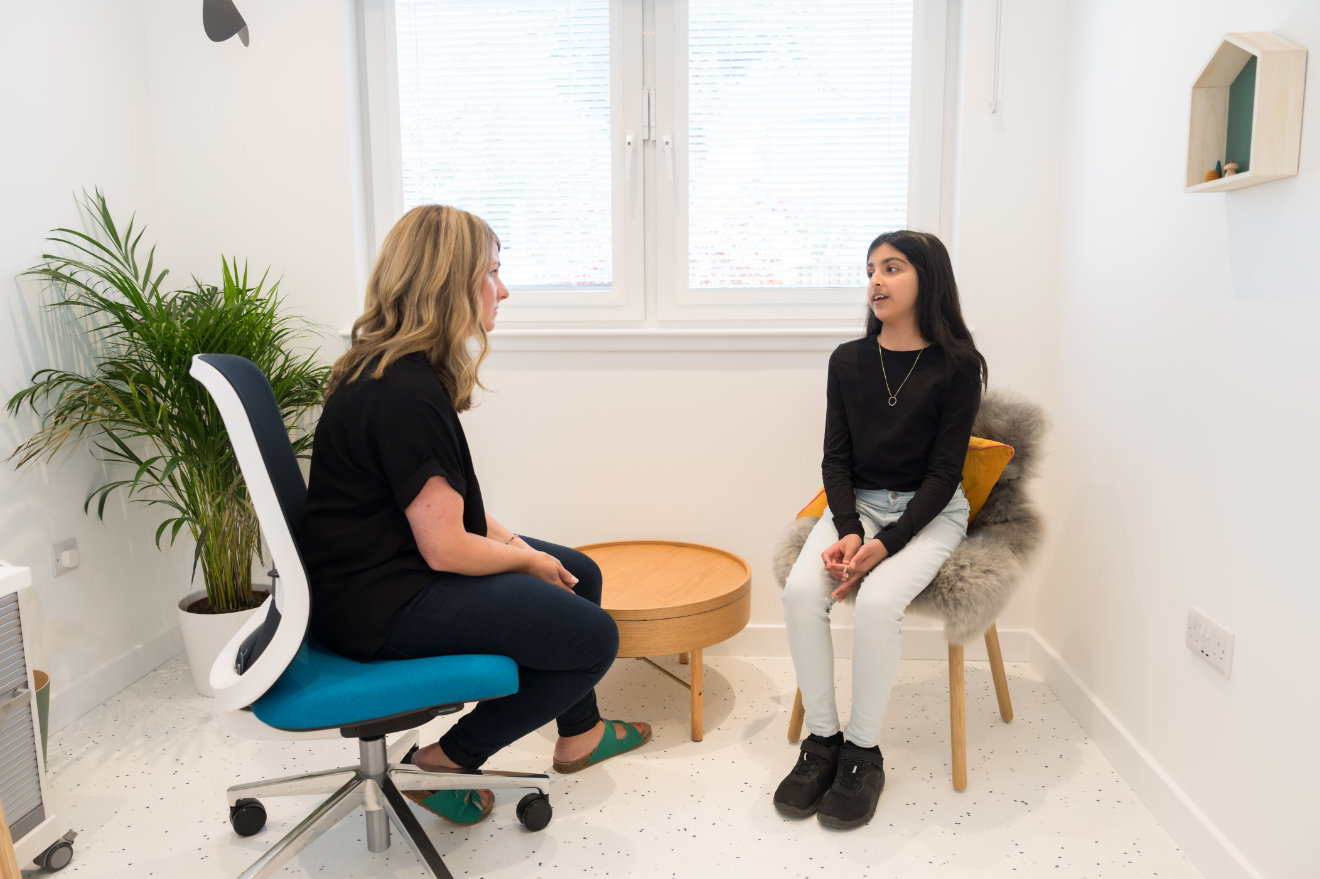
Within the Children First North Strathclyde Bairns Hoose a number of children have described their experience of being questioned within a proof hearing as a cross examination of their evidence. Their accounts show a high degree of similarity in relation to the levels of stress they experience, when compared to giving evidence within criminal proceedings. In addition their needs as child witnesses appear to be given less priority within this process. Whilst professionals understand that a proof hearing and a criminal court hearing are different, children’s experience of these are remarkably similar.
Child witnesses describe the experience of going to court to talk about what happened to them as highly stressful and retraumatising, regardless of whether this is within a proof hearing or a criminal court process. In addition, due to the less formal setting of the proof hearing for the child victim or witness there can be the additional pressure of both families meeting each other on the day and a heightened sense of emotions around which of the young people are telling the truth. The Children First North Strathclyde partnership is committed to developing the means to offer routine access to the Justice Suite for child victims and witnesses participating in proof hearings within children’s hearing process. However, the mechanism enabling this to happen still need to be developed and tested.
Health
The Bairns’ Hoose standards position children’s right to access health and wellbeing support (standard eight). The commitment to children is that their physical, emotional and mental health is looked after, that someone helps them to plan appointments and gives them support to attend as required. This standard upholds UNCRC Article 24.
In line with the Bairns’ Hoose standards for Scotland, Children First's aspiration is that, in time:
- Children who report historic sexual abuse will be offered medical assessments in the Bairns Hoose, to offer reassurance and guidance as well as provide an opportunity to capture any existing health needs.
- All children and young people who have a Joint Investigative Interview will be routinely offered a health assessment of their physical and emotional wellbeing. This is consistent with other European Barnahus and appropriate given that some children and young people attending Bairns Hoose will be subject to concerns about physical abuse, assault, emotional abuse and/or neglect.
Current medical examinations for children in North Strathclyde
For the small number of children who require a forensic medical examination these take place outside the Bairns Hoose at two sites in Glasgow. For under 13-year-olds this is in the children’s hospital. For young people aged 13-17 year old this takes place at a Sexual Assault Referral Centre.
Children aged up to 12 years: In North Strathclyde children aged up to 12 years and subject to child protection investigation, are examined by a paediatrician at the Queen Elizabeth University Hospital, including those who allege a rape, sexual assault, abuse, familiar or non-familial abuse, within the previous seven days. It is the preference of the paediatrician that a child has already had their Joint Investigative Interview (so that they know what the child is saying has happened to them). In practice currently for this age group the medical examination usually happens after the Joint Investigative Interview.
Children aged 13 years and over: Young people aged 13 years and over who allege a rape, sexual assault, abuse, familiar or non-familial, within the previous 7 days, who require a medical examination, have this at Archway - West of Scotland Rape and Sexual Assault Service. In practice currently for this age group, where there is a forensic window after the Joint Investigative Interview (within 7 days), the medical examination usually happens before the Joint Investigative Interview in order to maximise DNA capture.
Medical examinations in the Bairns Hoose
At the point of developing this practical guide there was a dedicated “health suite” within the Bairns Hoose which provides a space and meets the specification for physical health checks. Work is underway to secure a senior nurse practitioner to set up, coordinate and deliver routine follow up post-interview, aiming to facilitate children’s access to and engagement with checks and support with physical health issues. The outcome and learning from this test of change combined with learning from other Bairns’ Hoose pathfinder areas, will help shape the future health provision going forward.
Quotes from young people ('Millie', 'Clementine') are taken from: Mitchell, M., et. al. (2024) The story so far - North Strathclyde Bairns Hoose Evaluation – Phase two evaluation report. University of Edinburgh, pages 19 and 20